
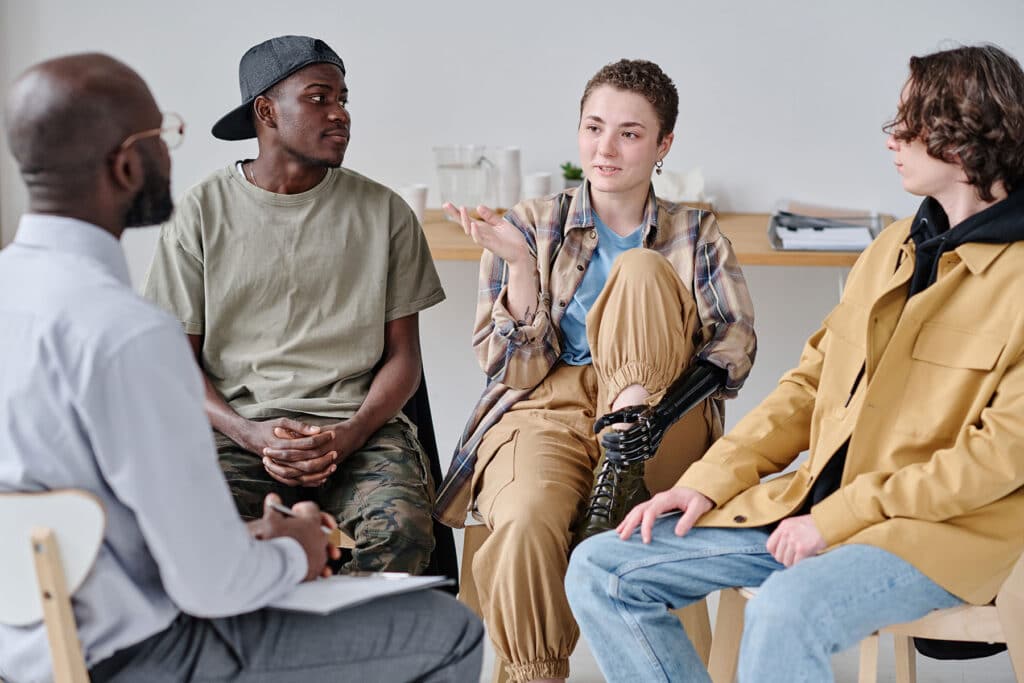
Group therapy can be a powerful tool for addressing adolescent mental health challenges. It gives teens a supportive space to connect with others who share similar experiences and learn helpful coping skills from trained professionals.
In this blog post, you’ll see how fun and engaging group therapy games can make these sessions feel more approachable for teens. You’ll also find a list of 25 different activities that help break the ice, build trust, and make group work feel more comfortable and inviting.
What Are the Benefits of Group Therapy Games?
Group therapy games give teens a structured, low-pressure way to open up, connect, and build emotional skills. Here are the key benefits, explained in a simple, clear way:
Easier for Teens to Participate
Games lower the tension that can come with talking about feelings. Teens are typically more willing to speak, share, and take small risks socially when focused on a game.
Build Trust and Connection
Activities that involve teamwork or shared experiences help teens feel more comfortable with one another. This sense of connection makes deeper therapeutic work easier over time.
Help Teens Practice Communication Skills
Many games require listening, expressing ideas, giving feedback, or working together. These moments help teens strengthen the communication skills they need in everyday life.
Support Emotional Awareness
Games focused on feelings, reflection, or self-expression give teens a clearer way to understand what they’re feeling and why. This helps them build emotional vocabulary and recognize patterns.
Make Difficult Topics More Approachable
Some teens shut down when asked direct questions. Games offer a buffer, allowing them to talk about tough experiences in a more comfortable, indirect way.
Encourage Problem-Solving
Activities that involve strategy, teamwork, or group discussion help teens learn how to think through challenges and explore different perspectives.
Boost Confidence
Sharing ideas, completing tasks together, and being positively recognized by peers help teens feel more capable and valued.
Help the Therapist Observe Group Dynamics
Games reveal how teens interact—who takes the lead, who pulls back, who struggles with frustration, and who communicates well. This gives the therapist clues about each person’s needs.
Fun Group Therapy Activities to Try
Here are group therapy games for teens that can help make therapy sessions more enjoyable and effective.
1. Two Truths and a Lie
This classic icebreaker can be used in a therapeutic setting to help group members get to know each other. Each person takes turns sharing three statements about themselves; two are true, and one is false. The group then tries to guess which statement is the lie. This game can help build trust and encourage openness among group members.
2. Mindful Coloring
Coloring has become a popular relaxation technique for people of all ages. In group therapy, mindfulness coloring books can be a great way to help adolescents calm their minds and focus on the present moment. This activity can also stimulate conversation around emotions and coping strategies to develop as a teen.
3. The Name Game
The “Name Game” is another classic icebreaker that can be adapted for therapy. Each person comes up with a word or phrase that describes them, using the first letter of their name. The group then takes turns sharing their words and discussing their meanings. This activity can help build self-awareness and encourage self-expression.
4. Collaborative Drawing
Collaborative drawing is a fun and creative activity that can help build cooperation and communication skills. In this game, the group works together to create a drawing, taking turns adding to it. The drawing can be anything from a silly cartoon to a meaningful symbol. This activity can help break down barriers and build community among group members.
5. Feelings Jenga
Feelings Jenga is a twist on the classic Jenga game involving emotions. Each block in the Jenga tower has a feeling written on it, such as “happy,” “sad,” or “excited.” When players pull out a block, they must share a personal experience or thought related to that feeling. This fun group therapy game can help build emotional awareness and encourage empathy.
6. Snowball Fight
In this game, each group member writes down a thought or feeling on a piece of paper and crumples it into a “snowball.” The group then has a mock snowball fight, tossing the snowballs back and forth. After a few minutes, each person picks up a snowball and takes turns reading and discussing the contents. This activity can help break down emotional barriers and encourage vulnerability.
7. Pass the Drawing
In “Pass the Drawing,” each person starts with a blank paper and draws a simple shape or line. They then pass the paper to the next person, who adds their drawing. The paper is passed around the group until everyone has had a chance to contribute. This activity can help build creativity and teamwork skills while stimulating conversation around collaboration and communication themes.
8. Strengths Circle
Each teen writes down one personal strength on a slip of paper. The slips go into a bowl, and each person draws one at random. They read it aloud and guess who wrote it. After the reveal, the group talks briefly about how that strength shows up in that person’s life. This activity encourages self-esteem and helps teens see how others view them in a positive way.
9. “If You Really Knew Me…”
Teens sit in a circle and finish the sentence “If you really knew me, you’d know…” with something honest about themselves. It can be lighthearted or deeper, depending on comfort level. This game helps build vulnerability and creates space for honest connection without pressure.
10. Values Scavenger Hunt
Create a list of values like kindness, courage, honesty, creativity, or teamwork. Teens then find real-life examples of those values within the group—such as “someone who showed kindness this week” or “someone who took a risk today.” This promotes awareness of positive behavior and strengthens group bonding.
11. Emotion Charades
Write different emotions on slips of paper. Each teen picks one and acts it out without using words. The group guesses the emotion and follows it with a short discussion about when they’ve felt it and how they knew. This helps teens understand emotional expression and builds empathy.
12. Circle Storytelling
One person starts a story with a prompt like: “Yesterday I realized something important…” or “This morning I felt…” Each person adds a line as it goes around the circle. The story often moves between humor and insight, giving teens a safe way to express themselves and practice active listening.
13. Inside–Outside Masks
Teens draw a mask: the outside shows what they share with others, and the inside shows thoughts or feelings they usually keep hidden. After drawing, they can share whatever feels comfortable. This helps teens explore identity, emotional safety, and personal expression.
14. Coping Skills Bingo
Create bingo cards with healthy coping skills like deep breathing, listening to music, taking a walk, journaling, or talking to someone they trust. Read different situations aloud, and teens mark the skill they’d use in that moment. This helps normalize healthy coping and encourages discussions about stress management.
15. Walk to the Line
Place a strip of tape on the floor. Read statements such as “I’ve felt overwhelmed lately” or “I’ve worried about the future.” Teens take a step toward the line if the statement is true for them. Afterward, the group reflects on what it was like to see others share similar experiences. This activity builds trust and reduces feelings of isolation.
16. The Compliment Web
Everyone stands or sits in a circle with a ball of yarn. One teen holds the end, gives a genuine compliment to someone in the group, then tosses the yarn to them. That person does the same, and so on, creating a “web.” At the end, the group notices how everyone is connected through kindness and support.
17. Body Scan Check-In
Teens close their eyes (optional) while the facilitator guides them through a simple body scan—checking in with their breathing, muscles, and overall tension. Afterward, teens share one thing they noticed. This builds awareness around stress and helps them tune into physical cues.
18. Group Playlist
The group creates a shared playlist where each person adds a song that matches their current mood or a message they want to express. Teens then share why they picked their song. This encourages emotional expression through music and sparks meaningful conversation.
19. The Ups & Downs Jar
Teens write one “up” (a small win) and one “down” (a challenge) from their week on slips of paper. The group draws some at random and discusses them without naming whose is whose unless the teen chooses to share. This supports emotional processing and normalizes ups and downs.
20. Problem-Solving Roundtable
One teen shares a small, real-life challenge they’re dealing with. The group takes turns offering one idea or perspective. The person who shared can take or leave any suggestions. This teaches collaborative problem-solving while giving teens a sense of support.
21. Identity Collages
Using magazines, markers, or printed images, teens create a collage that represents different parts of who they are—interests, values, personality traits, or goals. When they share, they explain the meaning behind their choices. This helps with self-awareness and confidence-building.
22. Emotion Thermometers
The facilitator draws a thermometer from 1 to 10 on a board. Teens take turns placing themselves on the scale for feelings like stress, motivation, or confidence. They explain why they chose that number and what might help them shift a point or two. This builds emotional awareness and introduces healthy coping ideas.
23. Silent Line-Up
Without talking, the group lines up in order of something like birth month, height, or how much energy they have today. They must use gestures, facial expressions, or creativity to figure it out. Afterward, the group debriefs what communication strategies worked. This helps develop teamwork and nonverbal communication skills.
24. Future Headlines
Teens write a future “headline” about something they hope to accomplish, like “Alex Completes First 5K” or “Jordan Becomes a Mentor.” They share their headline and what steps would help them move toward it. This encourages goal-setting and builds optimism.
25. Rose, Thorn, Bud
Each teen shares a “rose” (something good), a “thorn” (a challenge), and a “bud” (something they’re looking forward to). It’s simple, quick, and helps everyone check in emotionally while giving the group a clearer sense of each person’s current needs.
Find Supportive Group Therapy for Your Teen
Fun group therapy activities for teens can help make therapy sessions more engaging and effective. By incorporating fun and creative activities, adolescents can build social skills, emotional awareness, and coping strategies in a supportive environment.
At Imagine Seattle, we offer a range of adolescent therapy activities, including group therapy, individual therapy, family therapy, and trauma-informed care. Contact us today to learn more about group therapy as part of our teen treatment programs.